
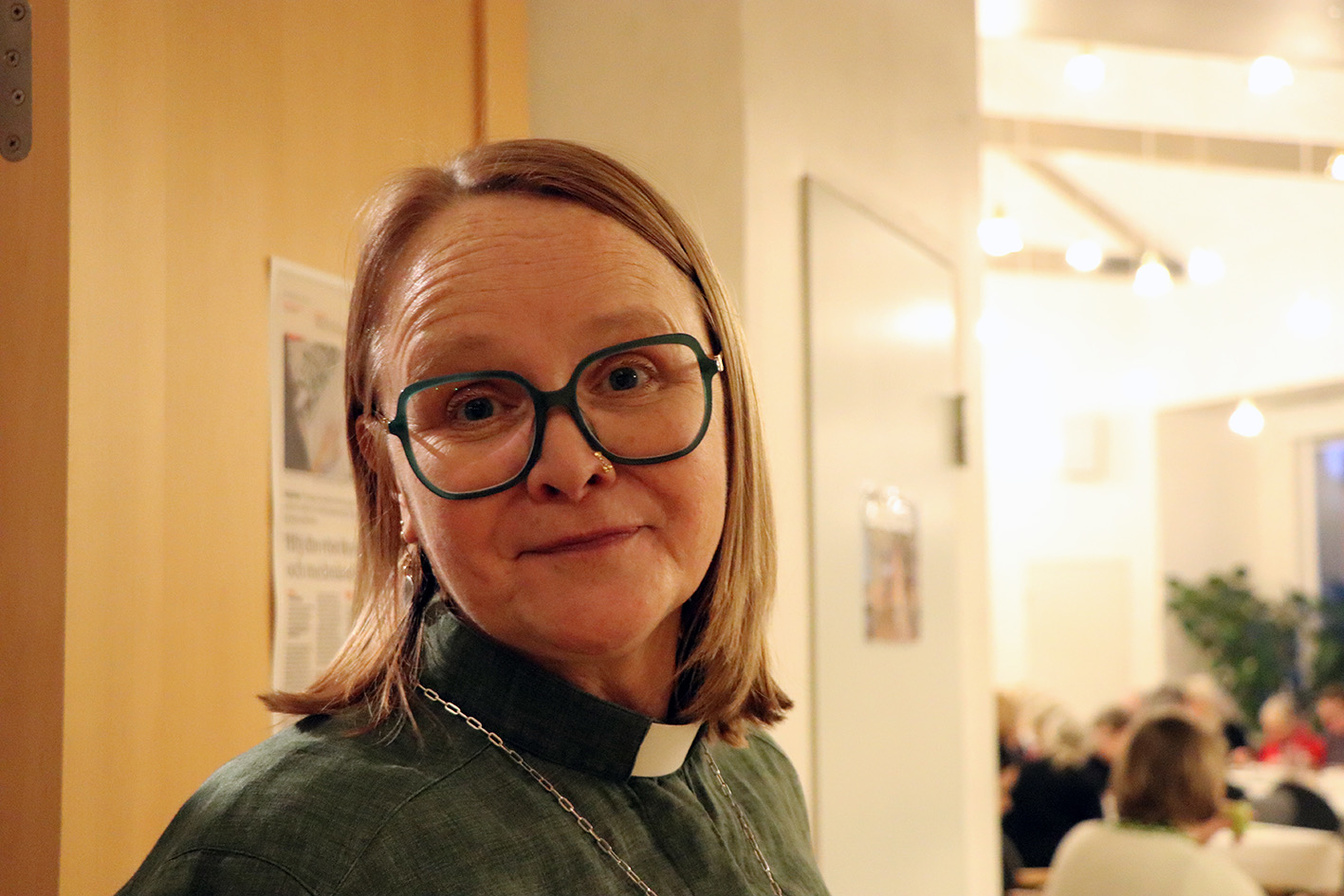
The struggles they encountered, as the post-2015 solidarity movement vanished in Sweden, were unheard of. The news of increasing legal and police repression, social violence and hostility towards newcomers, did not reach the quiet streets of Örgyte, a small suburb of the city of Gothenburg. Unsettled by such a silence, Anette was trying to challenge it with a few colleagues. First, through the installation of a traveling exhibition launched by the then Church of Sweden program Interreligious Practice for Peace – A World of Neighbors: Rye in the back – Embroidery for religious peace. She had then come across a group of local volunteers, “the volunteers of Örgryte/Bergsjön” wishing to raise awareness and do advocacy work on migration policy, with whom she had written a letter to Swedish bishops, demanding that they address and speak against anti-immigrant and xenophobic rhetoric.
Breaking silence and walls
A few months later, as some of us AWoN practitioners were spontaneously gathering in a group call to share about our grief and anger at wars raging once again in Afghanistan, Pakistan, Lebanon and Iran, while devastation and genocide went on in Gaza, Anette shared a recent glimpse of hope she had felt. On the occasion of iftar, she and a few others had organized an evening of encounter and celebration of Lent and Ramadan between the local Christian and Muslim communities of her town. 120 people had joined, met, enjoyed music and shared a meal. Remembering her first attempts at breaking silence and walls, I was very moved to hear about such an event – and immediately wanted to learn more.
Anette and her friends’ text, published in the fall in the national paper of the Lutheran Church of Sweden, got a significant echo – a few months later, the group was visited by their local bishop, accompanied by the National General Secretary of the Church of Sweden. The two listened to people share about their experiences as immigrants in Sweden. A woman told them about the seven moves she and her children had to do in ten years, around the country, regardless of her health issues. A family of converted Christians described the hours of questioning they, children included, had to go through in front of the Migration Board, and their anguish as they now are waiting for the final decision on their asylum request. Another woman did not join the meeting but shared a text about her life as an immigrant, having to tell the story of her pain over and over again in the hope of being understood, considered. The volunteers of Örgryte/Bergsjön further explained their actions, that started in 2015 – visits to families living in the outskirts of the town, homework support and reading lessons for children, CV writing and job-seeking workshops, and a women’s group, among other initiatives. ‘It was good for the group to feel proud, to see that what they are doing matters to someone’, Anette recalls.
‘It is not something you go about and chant in the streets. People have to meet.’
Encouraged by this enthusiasm, the collective decided to go one step further, and gather people to raise the question of inequalities of treatment, experiences and discrimination between communities. ‘It is not something you go about and chant in the streets, Anette explains. People have to meet’.
It is while setting up a date for this first event that they realized it coincided with both Lent and Ramadan. Offering an ecumenical moment of conviviality for iftar thus appeared as an evidence, and a beautiful opportunity for people to meet and exchange on this specific time of the year, the meaning of fasting, and importance of rituals. On March 2nd, Muslim people entered the local Church of Örtyge ‘perhaps for the first time’, Anette smiles. Tables had been set, aimed at mixing guests and starting conversations on the basis of some questions such as ‘What does Lent/Ramadan mean to you?’ or ‘How does it feel to be asked where you are from?’
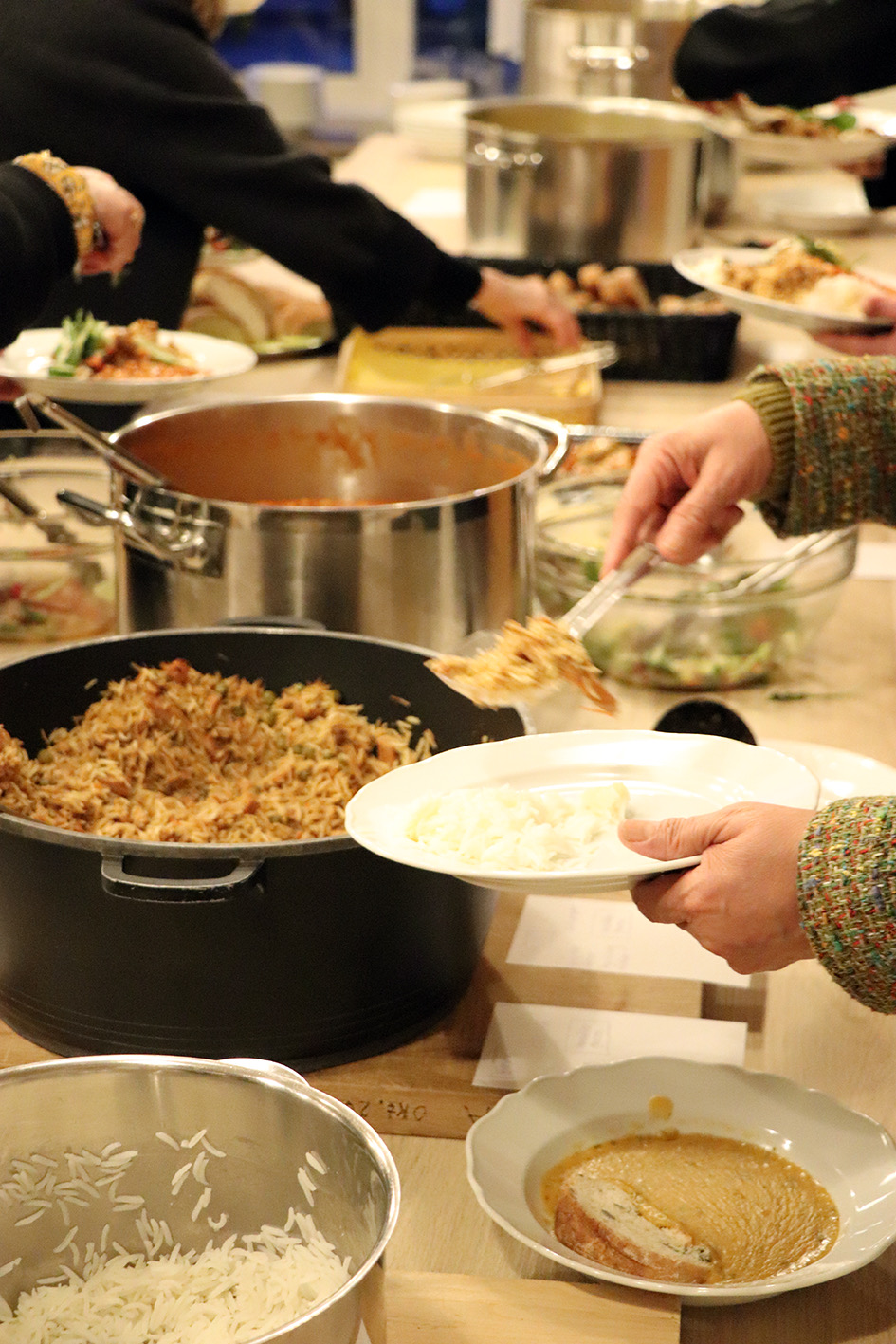
Some musicians started playing as people kept on arriving and food was shared. A priest and a leader of the local Muslim community, accompanied by four Christian and Muslim participants, shared reflections on this special moment of the year, personal stories, and answered questions from the audience. ‘I think that this is when we all realized that, as much as we do it in a different way (fasting, praying), we do it from the same place, with the same goal’, Anette tells me.
‘This room was full of people talking to each other’
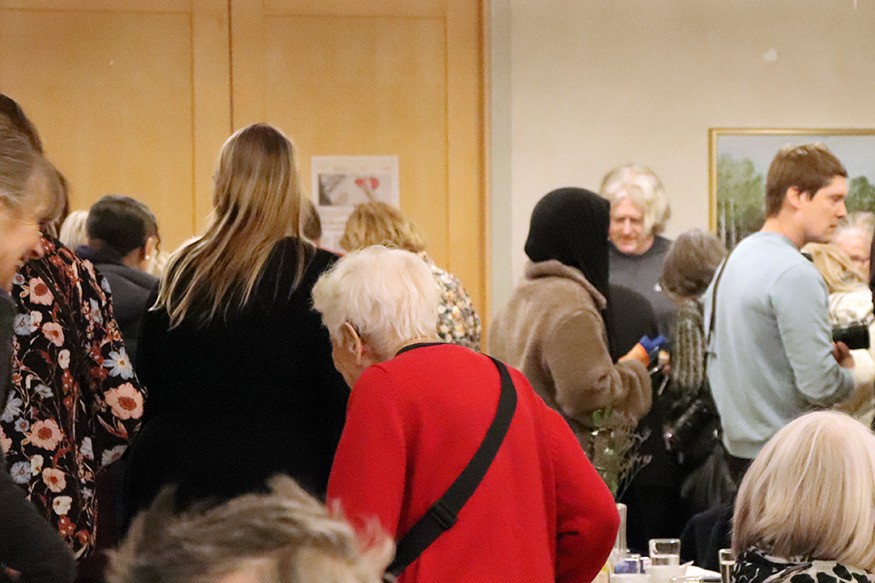
Looking around her as the evening was unfolding, she suddenly was struck. ‘This room was full of people talking to each other’. One hundred and twenty guests had responded to her group’s call, and were now chatting, meeting one another, sharing food. Some had come because of the music, others for the delicious meal, or to listen to the speeches, some had been invited by the volunteers, their neighbours or friends. And all were standing together.
‘We were preparing to meet protests’, Anette admits, ‘but it did not happen. Not during the event, at least’. A journalist from the Church of Sweden joined and reported on the event in a beautiful article that stirred some angry reactions from both within and outside of the Church community. ‘People think we are mixing religions, that we should stand for Christianity in Church, do missionary work and not dialogue’, Anette sighs.
A journalist from an important national newspaper, volunteering with the group, wrote about the event too. ‘She knows how much the media play a role in all this’, Anette goes on, ‘in what they are saying, and in what they are not’. Thinking back to the event a few weeks later, Anette is still moved. ‘It has been impressive, overwhelming, we did not expect so many people. It should be quite normal to meet and do things together, but it is not.’
‘It should be quite normal to meet and do things together, but it is not.’
When I ask her how it feels to have managed to gather so many people when she thought few cared, Anette thinks back to this exhibition she insisted on organizing in her church. ‘I remember the feeling – it was just standing there, no one noticed it. Now I have come to realize that it actually has been doing its work. Suddenly, on that night, it was at the right place’.
And it might just be the beginning. Throughout the event, and since then, people have come up to the organizers to join the group. ‘They started asking So, what now? What is the next step?’Anette laughs. She would love to organize a new gathering, in the summer, where people could write together, share stories, poems, ‘something to get the voices out, heard’.
People from her congregation are starting to mobilize as well, some helped organise the dinner. ‘This is a big difference from being alone’. Ties are developing between communities, and Anette’s congregation is thinking of organizing the next elderly group’s visit to the neighbouring parish of Bergsjön, further in the suburbs, where some of the dinner guests were coming. Anette indeed noticed ‘a lot of grey hair’ that night. ‘I actually think older people are more open’, she reflects, before concluding ‘They have been through things.’
Aude Sathoud
Support those who support by donating to AWoN today!
Cover picture: Ramadan-Lent dinner organized by the the volunteers of Örgryte/Bergsjön, March 2022.