
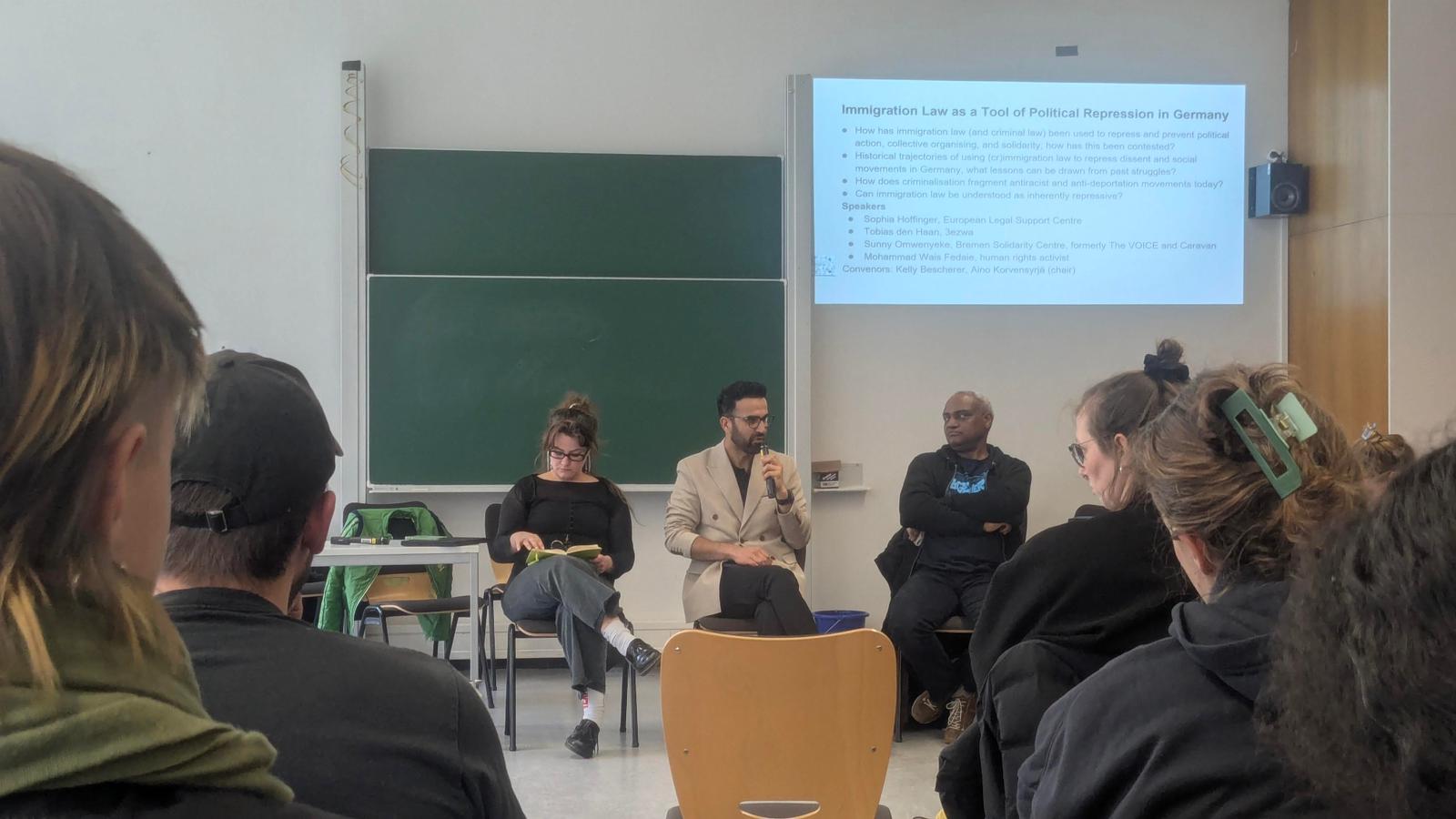
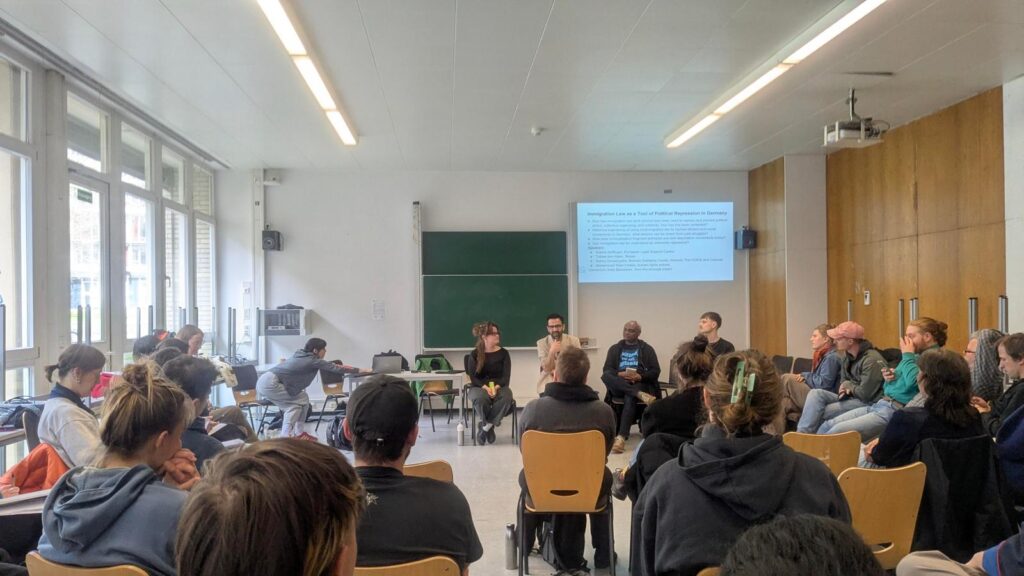
Invited to speak in the framework of the 2026 Conference of Kritnet, the Critical Migration and Border Regime Research Network at the University of Hamburg, whose theme this year was Authoritarianism and Border Regime: Struggles over Migration, Rights, and Democracy, Mohammad Wais Fedaie, founder of Farda-e-Roshan and AWoN member joined a roundtable on the Right of residence as a means of political repression. In conversation with Aino Korvensyrjä (University of Bristol), Sophia Hoffinger (ELSC), Tobias den Haan (3ezwa), and Sunny Omwenyeke (Bremen Solidarity and Caravan), Mohammad Wais discussed the increasing weaponization of residence law against people who show solidarity with Palestine, putting it into perspective in a broader historical and political context. ‘What historical development has the use of migration law taken toward the repression of dissent and social movements, and what lessons can be drawn from past struggles? How does criminalization today affect the fragmentation of anti-racist and anti-deportation movements? Can residence law be understood as fundamentally repressive – especially when migration itself is understood as a transnational social movement?’ Those are some of the urgent questions the speakers and audience grappled with.
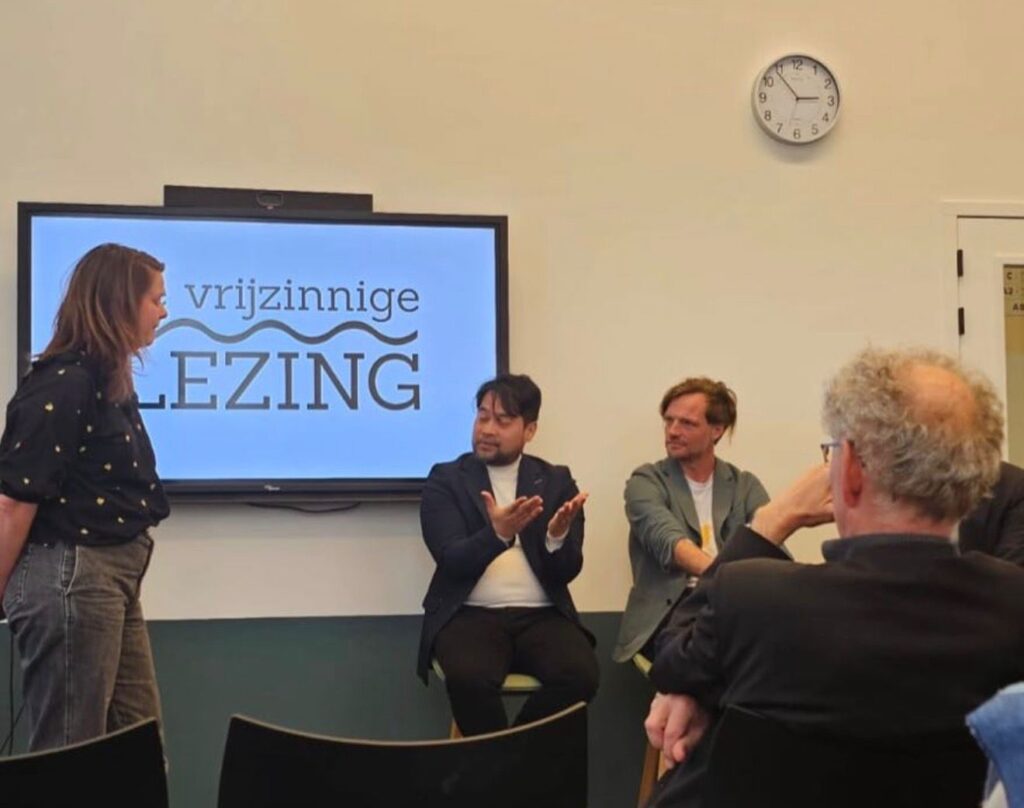
Meanwhile, in Utrecht, AWoN lead researcher Ulrich Schmiedel, Professor of Global Christianity at Lund University, was the 2026 guest of the Protestant Theological University’s Liberal lecture. Entitled ‘Liberalism’ as a Matter of Survival: Public Theology in the Age of Migration’, Ulrich Schmiedel’s lecture confronted the fact ‘the border around Europe is one of the deadliest in the world. In many countries, politicians and parties compete for the strictest border measures so that they can keep out people who have had to flee their homes. Human rights violations take place almost daily at Europe’s borders.’ In this context, Schmiedel argues, religion is far from being innocent. ‘Religion is crucial, both for the construction of European borders and for the criticism of them. The way religion is used in public and political discourse brings back the age-old clash between the defenders and the despisers of “liberal” theology – but the stakes are now much higher. Which theology prevails in the public space literally determines who can survive a border crossing and who cannot.’
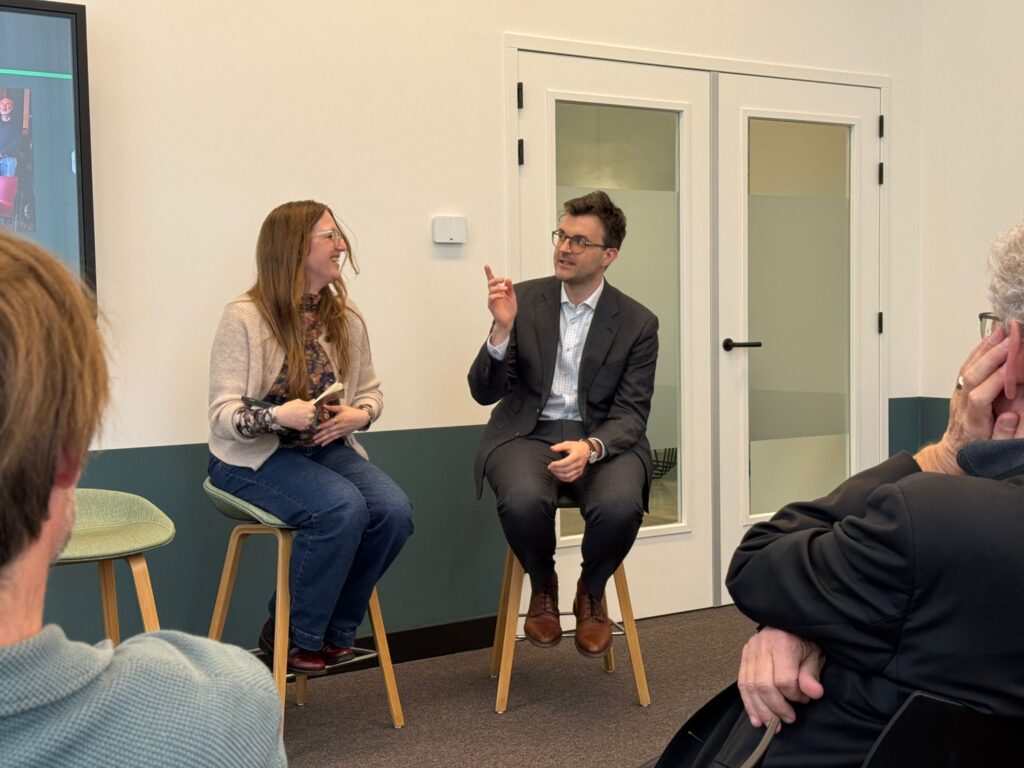
To discuss his claims and work, Ulrich Schmiedel was joined by two theologians and activists – the first of whom was no other than AWoN Director Rikko Voorberg. Hadje Sadje, the second respondent, is currently pursuing a PhD at the University of Vienna and focuses on decolonization, globalism and non-Western theology.
Learn more about the EU’s new ‘Return’ (Deportation) scheme and how it could impact the lives of thousands of people throughout the continent.